WisePrior


Overview
WisePrior is a production-grade Android task manager designed with a heavy focus on Scalability, Modularization, and Quality Engineering. Inspired by modern productivity tools, it serves as a technical showcase for Clean Architecture and robust background synchronization. Open source and available under the MIT License.
Quick Navigation
Demo
| Add reminders — Demo 01 | Add reminders — Demo 03 |
|---|---|
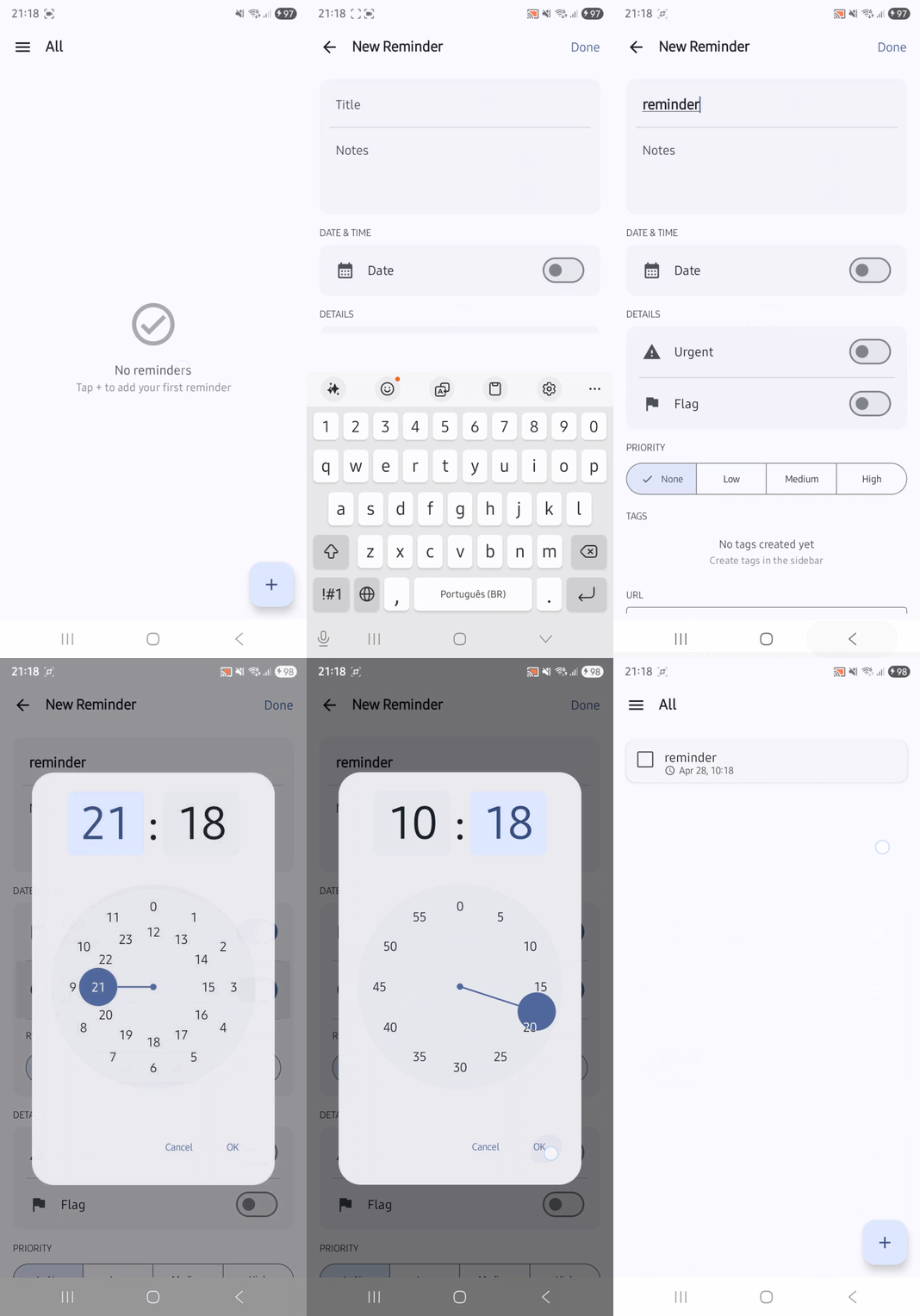 |
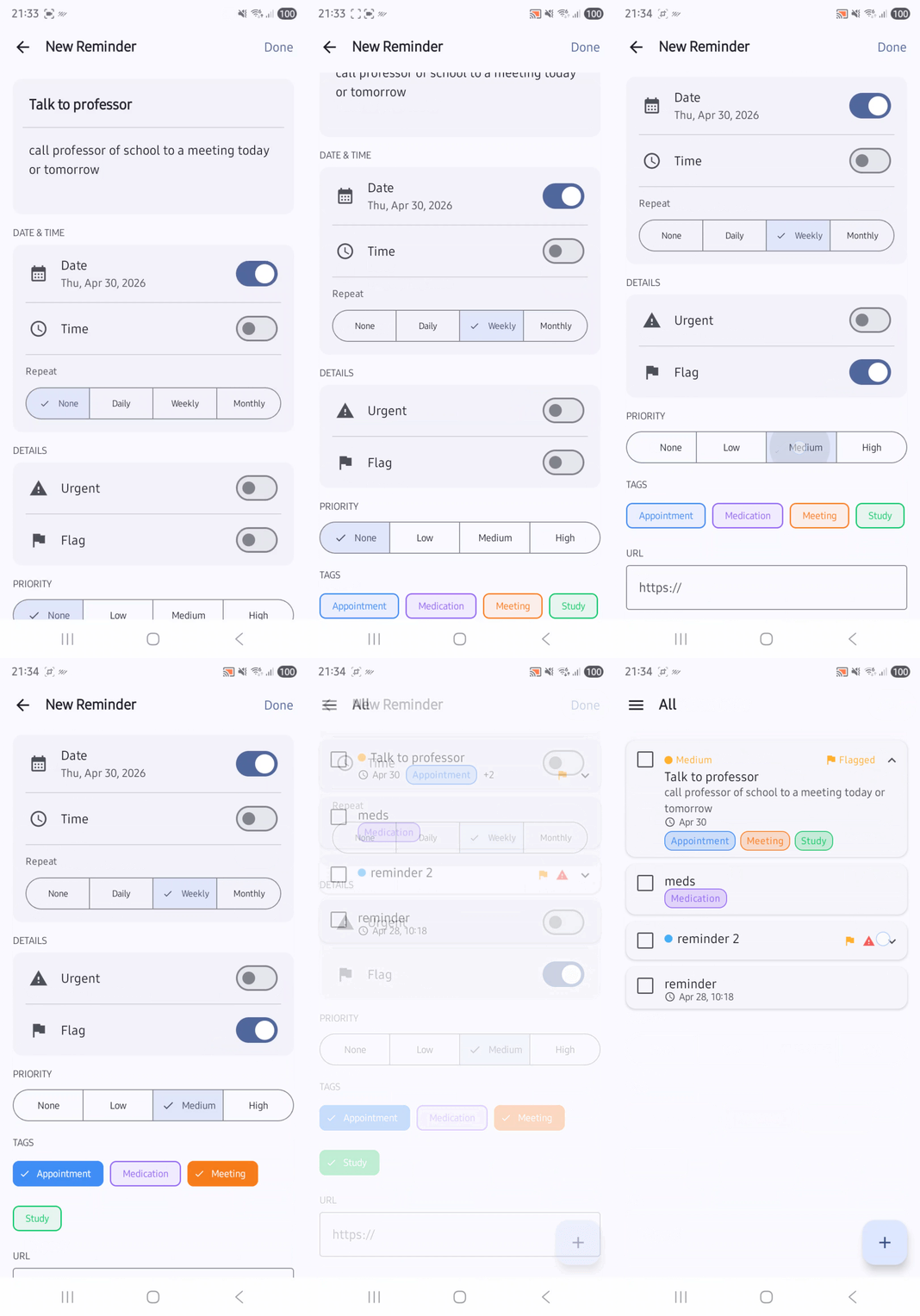 |
| List reminders — Light Mode | List reminders — Dark Mode |
|---|---|
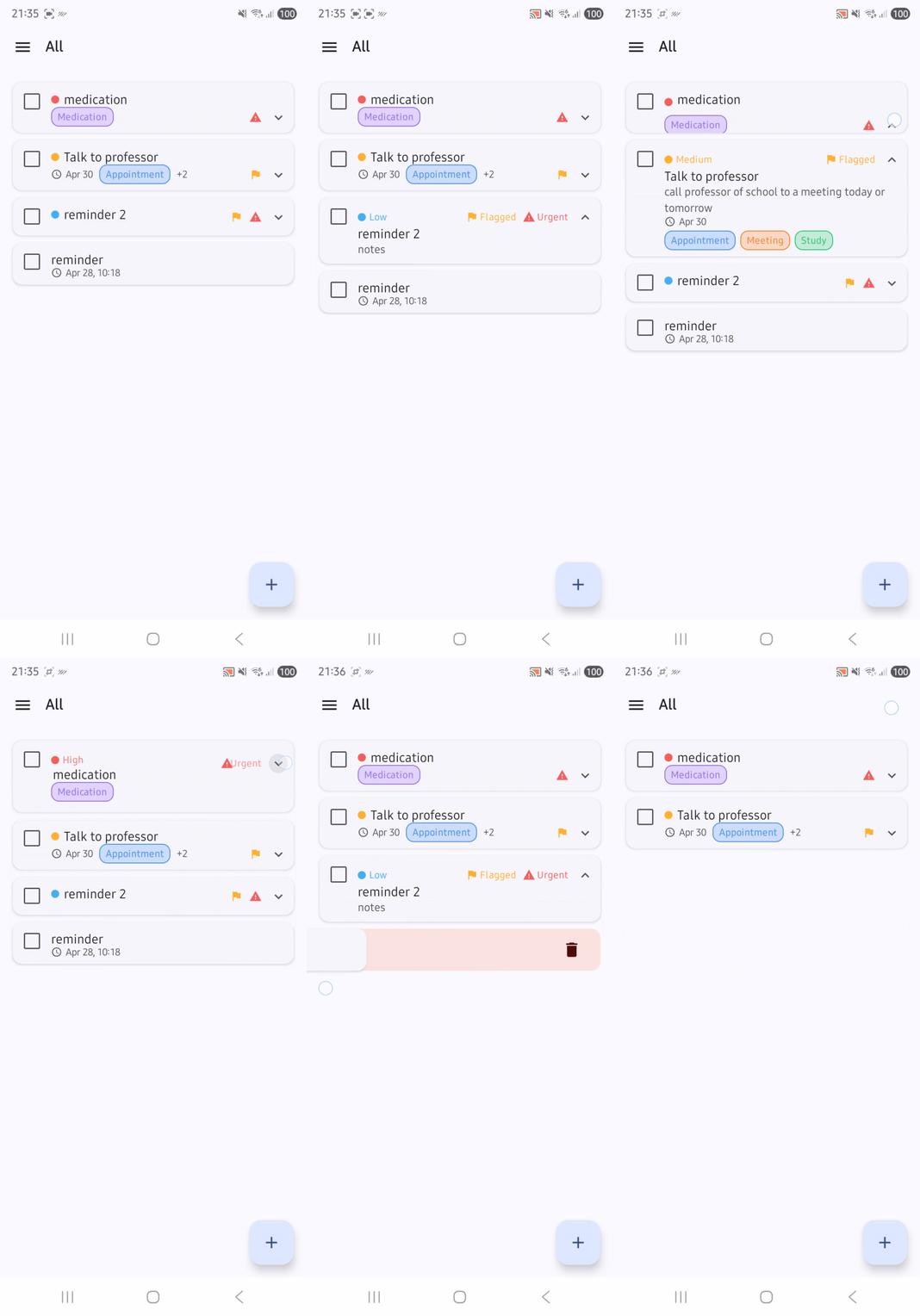 |
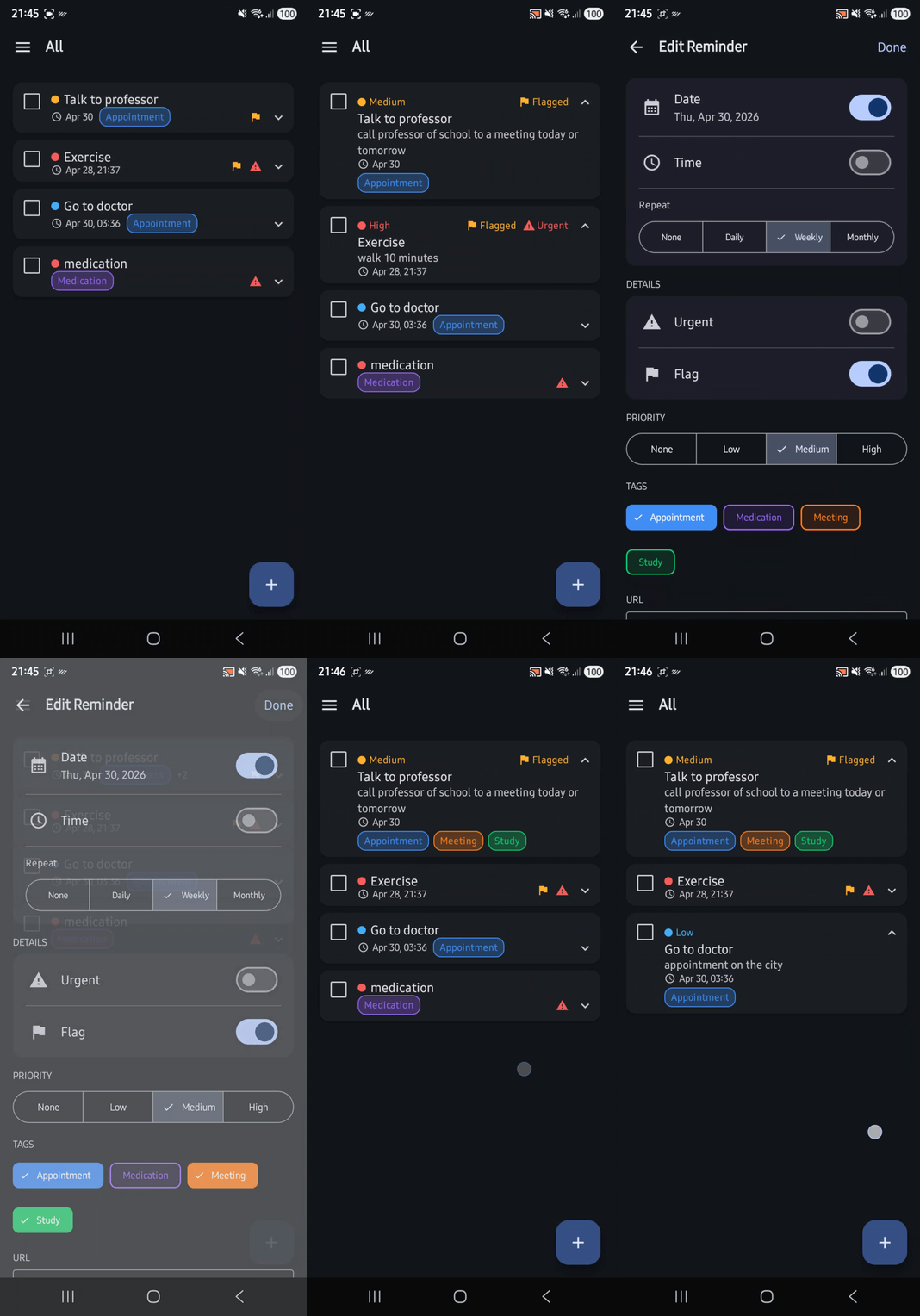 |
| Filters and Tag manager |
|---|
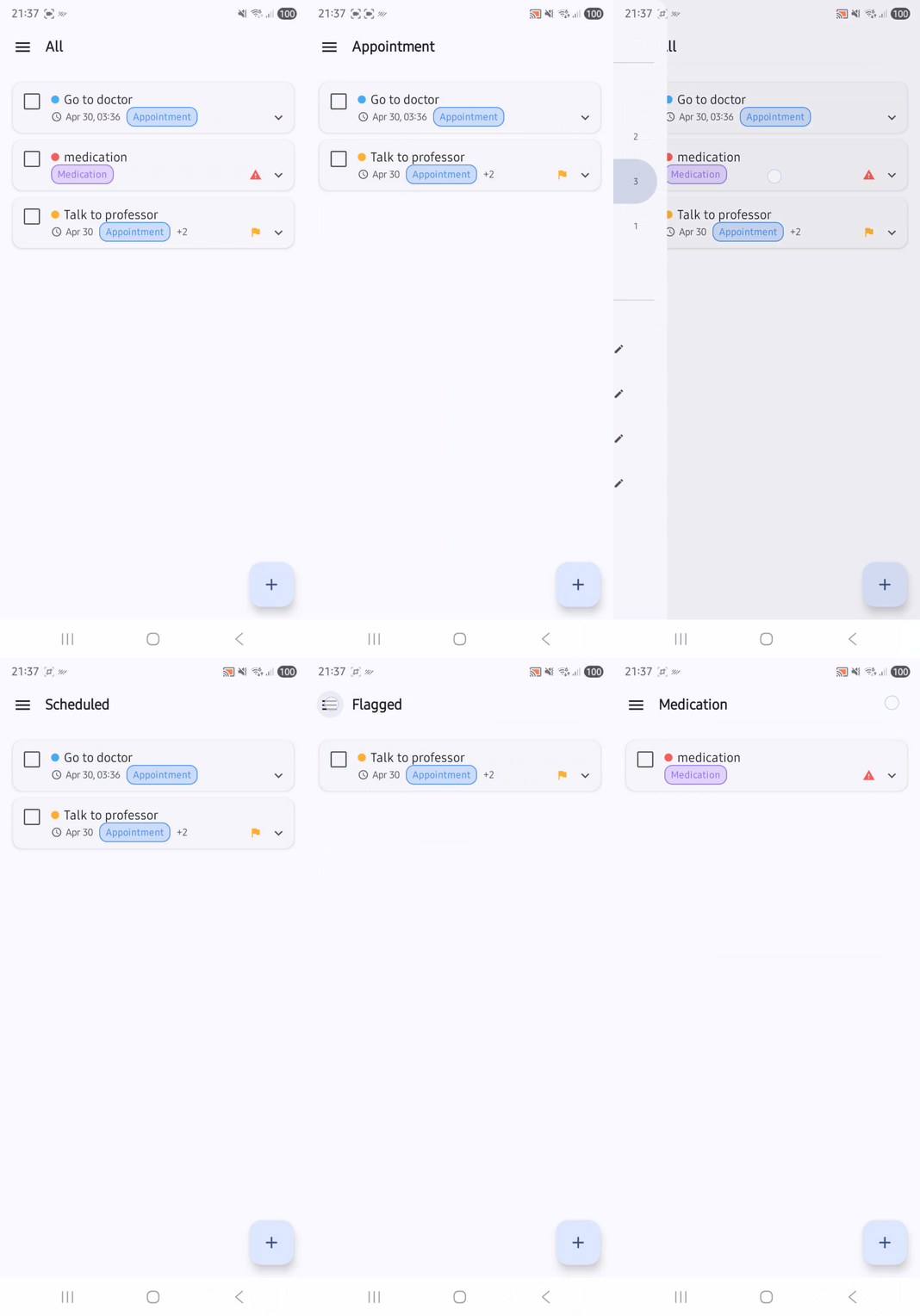 |
Architecture
WisePrior is built on Clean Architecture principles, enforcing a strict separation of concerns between business logic, data handling, and UI. This approach was chosen to ensure the codebase remains maintainable as features grow and to enable high-fidelity testing of each component in isolation.
The project utilizes MVVM for UI logic and MVI-inspired state management for predictable, unidirectional data flow, following the Now in Android best practices.
Layer diagram
┌────────────────────────────────────────────────────────┐
│                        :app                             │
│           Navigation 3 · Hilt setup · Deep links        │
└──────────────┬────────────────────────┬────────────────┘
               │                        │
┌──────────────▼──────┐   ┌─────────────▼──────────────┐
│  :feature:tasklist  │   │    :feature:taskeditor       │
│  ViewModel · UI     │   │    ViewModel · UI            │
└──────────┬──────────┘   └─────────────┬───────────────┘
           │                            │
           └──────────────┬─────────────┘
                          │
        ┌─────────────────▼──────────────────────────┐
        │                core modules                  │
        │                                              │
        │  :core:domain  ←──────  :core:model          │
        │       ↑                                      │
        │  :core:data  ←────────  :core:storage        │
        │       ↑                                      │
        │  :core:notifications  (AlarmManager + WM)    │
        │                                              │
        │  :core:ui  ←──────────  :core:designsystem   │
        │  :core:common                                │
        └──────────────────────────────────────────────┘
Module responsibilities
The project is decomposed into specialized modules, each adhering to the Single Responsibility Principle (SRP). These modular boundaries prevent “spaghetti dependencies” and significantly reduce build times via parallel compilation.
| Module | Responsibility |
|---|---|
:app |
Entry point, Hilt setup, Navigation 3 host, notification deep link handling |
:core:model |
Domain models (Task, Priority, RecurrenceType) — pure Kotlin, zero Android deps |
:core:domain |
TaskRepository interface + use cases: GetTasks, GetTaskById, AddTask, UpdateTask, DeleteTask |
:core:data |
TaskRepositoryImpl, TaskMapper, Hilt RepositoryModule |
:core:storage |
Room database v4, TaskEntity, TaskDao, TypeConverters, schema migrations |
:core:notifications |
AlarmManagerNotificationScheduler, AlarmReceiver, BootReceiver, RescheduleNotificationsWorker, NotificationHelper |
:core:designsystem |
WisePriorTheme, Material You colors, typography, shapes |
:core:ui |
Shared Compose components: TaskCard, ToggleRow, SectionHeader, EmptyState, PriorityBadge |
:core:common |
Coroutine dispatcher qualifiers (@IoDispatcher, @DefaultDispatcher, @MainDispatcher) |
:feature:tasklist |
Task list — TaskListViewModel, swipe-to-delete, animated list, notification cancellation on delete |
:feature:taskeditor |
Task editor — TaskEditorViewModel, date/time pickers, recurrence, notification scheduling on save |
Dependency rules
- Strict Boundaries: Feature modules depend only on
coremodules — never on each other. - Contract First:
:core:domaindefines the repository contract;:core:dataimplements it. - Data Isolation:
:core:storagehas no knowledge of domain models; mapping is handled exclusively in:core:data. - Infrastructure:
:core:notificationsdepends on:core:modeland:core:domainfor scheduling logic.
Tech stack
| Category | Library | Version |
|---|---|---|
| Language | Kotlin | 2.3.0 |
| UI | Jetpack Compose + Material 3 | BOM 2025.09.01 |
| Architecture | ViewModel + StateFlow (MVI-like UDF) | Lifecycle 2.10.0 |
| Dependency Injection | Hilt | 2.59 |
| Navigation | Navigation 3 (stable) | 1.0.0 |
| Database | Room | 2.8.3 |
| Background | AlarmManager + WorkManager | — / 2.10.0 |
| Annotation Processing | KSP | 2.3.4 |
| Build | AGP 9.0.0 + Gradle 9.1.0 | — |
| Serialization | Kotlinx Serialization | 1.7.3 |
Features
Task model
Each task carries: title, notes, URL, due date, time flag, urgent flag, priority (None / Low / Medium / High), tags, flagged marker, and recurrence type (None / Daily / Weekly / Monthly).
Task List screen
LargeTopAppBarwith collapse-on-scroll behavior.LazyColumnwith stable keys andanimateItem()for smooth insert/remove animations.- Swipe-to-delete with
SwipeToDismissBox— automatically cancels associated alarms. - Animated empty state and
ElevatedCardUI with custom priority indicators.
Task Editor screen
- Apple Reminders-inspired sectioned layout with IME-aware padding.
- Date & Time: Integrated Material 3 pickers with state preservation.
- Recurrence: Contextual recurrence selector visible only when a date is assigned.
- Organization: Priority segmented buttons and dynamic Tag input with
FilterChip.
Reminder notifications
- Exact alarm via
AlarmManager.setExactAndAllowWhileIdle()— fires even in Doze mode - Tap notification → navigates directly to the task editor
- Recurring reminders reschedule automatically from the original due time (no drift)
- Device reboot:
BootReceiverenqueues a WorkManager job that re-fetches all tasks and restores alarms - Recurring tasks whose alarm time passed during reboot are advanced to the next future occurrence
Edge-to-edge
enableEdgeToEdge() before setContent, windowSoftInputMode="adjustResize", insets via Scaffold.
State management (UDF)
Each feature follows strict Unidirectional Data Flow. Navigation is triggered via a Channel<Unit> — never via a boolean in UiState — to guarantee exactly one delivery and prevent flickering.
User action ──▶ ViewModel.onEvent(Event) ──▶ StateFlow<UiState> update ──▶ UI Recompose
                                        └──▶ Channel<Unit>.send(Unit) ──▶ Navigation
Quality Engineering & Test Strategy
At WisePrior, the architecture is the foundation of our testing strategy. By decoupling business rules from Android frameworks, we achieve a high degree of testability where every layer can be validated independently. Our suite provides fast feedback, prevents regressions, and ensures that critical user journeys remain functional across all SDK versions.
🏗️ Test Pyramid
The project follows the classic Test Pyramid principle: favour many fast, isolated unit tests at the base; a smaller set of integration tests in the middle; and targeted UI tests at the top for critical user flows.
         ▲
        /  \          UI / End-to-End
       / UI \         (Espresso — critical flows)
      /──────\
     /        \       Integration
    / Integrat.\      (Room in-memory, Repository + DataSource)
   /────────────\
  /              \    Unit tests
 /   Unit Tests   \   (Use Cases, ViewModels, Repositories, Mappers)
/──────────────────\
| Level | Scope | Speed | Cost |
|---|---|---|---|
| Unit | Business Logic, ViewModels, Mappers | ⚡ Milliseconds | Low |
| Integration | Persistence (Room), Repositories | 🕐 Seconds | Medium |
| E2E / UI | Full User Journeys (Compose + Espresso) | 🕑 Minutes | High |
🧪 Unit Tests
Unit tests target every layer of the Clean Architecture stack — use cases, repositories, mappers, and view models — using fakes and mocks to keep each test fully isolated.
What is covered
| Module | Classes under test |
|---|---|
core:domain |
All 9 use cases: GetTasksUseCase, AddTaskUseCase, UpdateTaskUseCase, DeleteTaskUseCase, GetTaskByIdUseCase, GetTagsUseCase, AddTagUseCase, UpdateTagUseCase, DeleteTagUseCase |
core:data |
TaskRepositoryImpl, TagRepositoryImpl, TaskMapper, TagMapper |
core:storage |
Converters (Room TypeConverter round-trips) |
feature:tasklist |
TaskListViewModel — state emissions, deletion, error handling, all 6 collection filters, tag editor with MAX_TAGS enforcement |
feature:taskeditor |
TaskEditorViewModel — task loading, all TaskEditorEvent types, save validation, date/time preservation, notification scheduling |
Tools
| Tool | Role |
|---|---|
| JUnit 4 | Test runner and base assertions |
| MockK 1.13 | Kotlin-idiomatic mocking — mockk(relaxed = true), slot capture, coVerify |
| Turbine 1.2 | StateFlow / Flow testing: awaitItem(), cancelAndIgnoreRemainingEvents() |
| kotlinx.coroutines.test | runTest, UnconfinedTestDispatcher, Dispatchers.setMain/resetMain |
Naming convention — every test name is self-documenting using the given / when / then format:
@Test
fun `given active ByTag collection, when that tag deleted, then selection falls back to All`()

@Test
fun `given tag count at maximum, when saveTag called for new tag, then error is set and tag is not added`()
Coverage Overview
- Domain: 100% of use cases validated, including complex task lifecycle rules.
- UI Logic: ViewModels tested for state emissions, event handling, and input validation.
- Data: Mappers and Converters verified for data integrity across transformations.
Key Scenarios
- Collection filters (Today, Scheduled, Flagged, etc.) verified for accuracy.
- Tag limit enforcement (MAX_TAGS = 5) and error state propagation.
- Date/Time logic cascades (e.g., clearing date automatically resets recurrence).
🔗 Integration Tests
We utilize an in-memory Room database to run integration tests that validate the real data flow from the repository down to the SQLite layer.
Why In-Memory?
- Determinism: Each test starts with a clean slate, eliminating shared state flakiness.
- Realism: Verifies SQL queries, migrations, and reactive Flow emissions against a real SQLite engine.
📱 E2E & UI Tests (Espresso + Compose)
End-to-End tests in the :app module exercise the full stack, including Hilt dependency injection and Navigation 3 transitions.
Full Task Lifecycle Test
- App launches into an empty state.
- User creates a new task via the FAB.
- Task is edited (title change + priority update).
- Task is marked as completed.
- All UI states are verified to match the persistent data layer.
Stability Features
- GrantPermissionRule: Automatically handles runtime notification permissions to avoid UI blocking.
- Declarative Synchronization: Custom
waitUntilhelpers ensure tests wait for async database operations before asserting.
⚙️ CI/CD & Coverage
- Continuous Integration: Every PR triggers the full test suite via GitHub Actions.
- Quality Gate: Merges to
masterare blocked unless all Unit and UI tests pass. - Visibility: Coverage is tracked via JaCoCo and reported through Codecov for transparent quality tracking.
Getting started
Requirements
- Android Studio Meerkat or later (bundled JDK 21 required)
- Android SDK 36
Clone and run
git clone https://github.com/gugabrilhante/WisePrior.git
cd WisePrior
./gradlew assembleDebug
Author
Gustavo Brilhante — gugabrilhante@gmail.com
License
This project is licensed under the MIT License - see the LICENSE file for details.